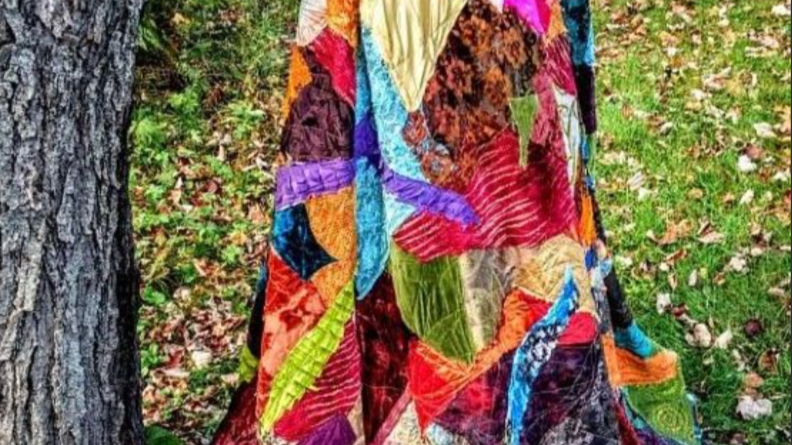
My life's story covers me like a patchwork cloak. My history and future entwined - a brightly coloured, multidimensional piece stitched together from survival, joy, grief, disadvantage, achievement and hope. Identity is socially constructed, fluid, dynamic and adaptable; my cloak is my identity, not a fixed thing, but always being revised.
I will use the metaphor of a multicoloured patchwork cloak to explain what it is like to live with triple neurodivergence, disability, shifting identities, socio-economic status, and imposter syndrome in social, academic and professional contexts.
This cloak is a glorious amalgamation of shapes, textures and fabrics. Some pieces are still becoming, still struggling to expand under the echoes of society's oppression that tell them they have no place being unique or beautiful. Others are faded, with loose threads I once wished would fall away forever. But they cannot, because they are part of me.
I attended a school that did not recognise neurodivergence, particularly in girls who achieved highly academically. I was labelled "gifted" while simultaneously struggling to manage day-to-day tasks. I talked too much, fidgeted constantly and felt entirely out of place. ADHD is underdiagnosed in females, in part because girls may be more likely to develop masking and camouflaging behaviours which suppress visible aspects of ADHD through intense social monitoring and self-regulation.
I often think of that version of me now. The golden student, achieving A stars but slowly dying inside. Those years still exist within my cloak, faded now, but never fully gone. It was about learning to live alongside them without shame.
Here is the piece I want you to take with you, whatever else you remember from this:
I coined the term 'Stimuli Goodness of Fit' in my Against Complex Barriers framework. It explains how sometimes the stimuli around a person within their environment is simply not a fit, and this is no more their fault than it is a child whose relationship with its mother lacks 'goodness of fit'. In line with the social model of disability, a lack of goodness of fit for neurodivergent and/or disabled people creates disability through a lack of ability to thrive and access the world; my framework calls for environmental accountability in opposition to seeing neurodivergence as a personal problem.
Read that again if you manage, lead, teach, or love someone whose environment keeps telling them they are the problem. It is very rarely them. It is the fit.
It is the fit.
Aside from my amazing son, of all the bright colours on my cloak, the patches I am most proud of are those of my education. After diagnosis, I rediscovered learning. Psychology became more than a degree; it became part of my identity.
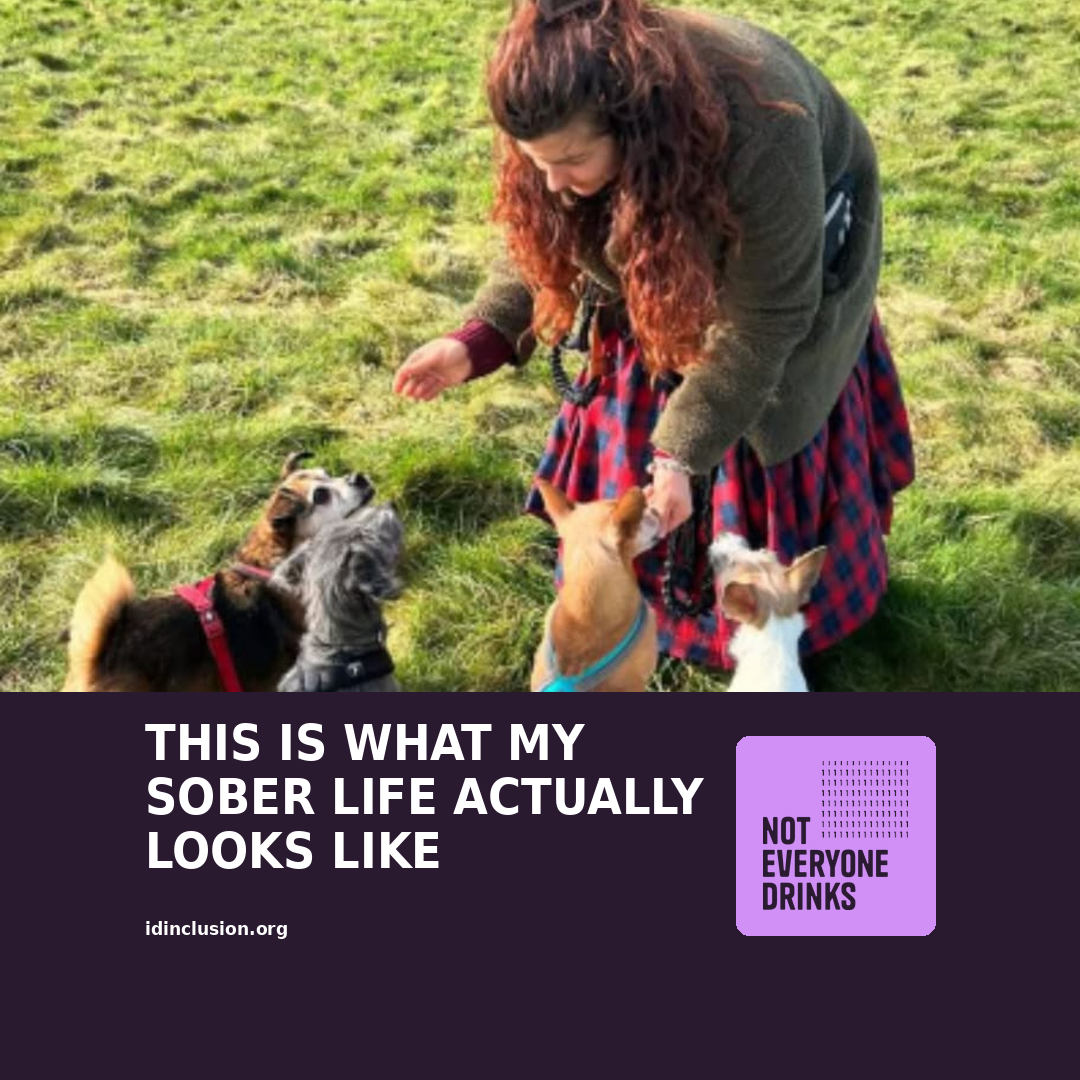
I started a national campaign - Not Everyone Drinks – from my front room, and it reached leading alcohol safety organisations, charities, even parliament within weeks. Yet despite these achievements
I still sit at home wondering – how can I wear so many sides of my cloak and are they legitimate?
This is what imposter syndrome does, and a lack of stimuli goodness of fit.
For postgraduate study, I will attend the Judge Business School at the University of Cambridge. Something that once felt completely out of reach. I also advocated for changing unfair bursary policies at another university and successfully initiated university-wide policy change, benefiting thousands. I did this alone as I could not attend that university, as their bursary was unfair.
The contradiction that so many people from disadvantaged backgrounds understand intimately is the ability to be capable yet be shut out of opportunity. What is rarely acknowledged is the psychological and physical toll of this contradiction: the persistent sense of being an imposter, of having opportunities just out of reach.
I deeply understand that inequality is not caused by a lack of ability or worth. It is structural. It is environmental. It is cyclical.
This is not just my story. It is the reason I do the work I do.
It is structural. It is environmental. It is cyclical.
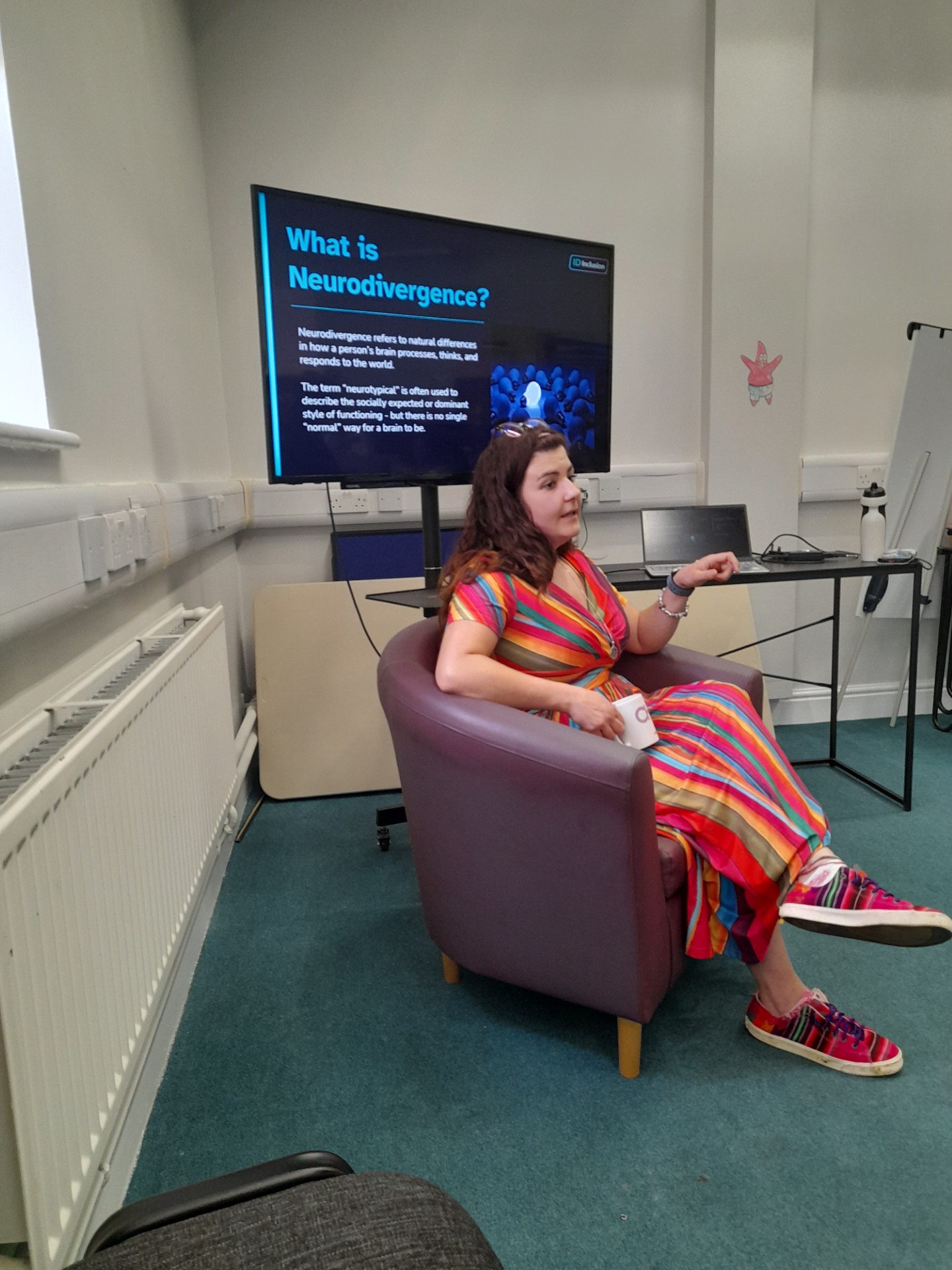
Every audit, every training session, every keynote I deliver on neurodivergence, invisible disability and recovery starts from this same place: the goodness of fit is missing, and it is fixable. I have sat on both sides of the table — as the person the environment failed, and now as the person organisations bring in to change the environment before it fails someone else.
And still, I find myself asking, who am I? The academic? The disabled woman? The former addict? The mother? The advocate? The working-class girl who learned to change her language, her behaviour and herself depending on where she was?
For a long time, I believed I needed one clear identity to belong. But I have come to realise that this pressure does not come from within me. It comes from a society uncomfortable with complexity, a society that demands people fit neatly into categories that can be easily understood and valued.
The truth is that I am all of these things simultaneously.
My cloak is imperfect. It is uneven, tangled and unfinished in places. But every part has been earned. The bright pieces shine not because life was easy, but because they survived.
If you recognise someone in your team, your family, or yourself in this - that's the conversation I want to have.
I work with organisations on exactly this: closing the gap between people and the environments meant to hold them - through training, mentoring, policy and process reviews, focus groups, and public speaking.
Please get in touch if you want to talk about what that could look like for you and check out my website at ID Inclusion