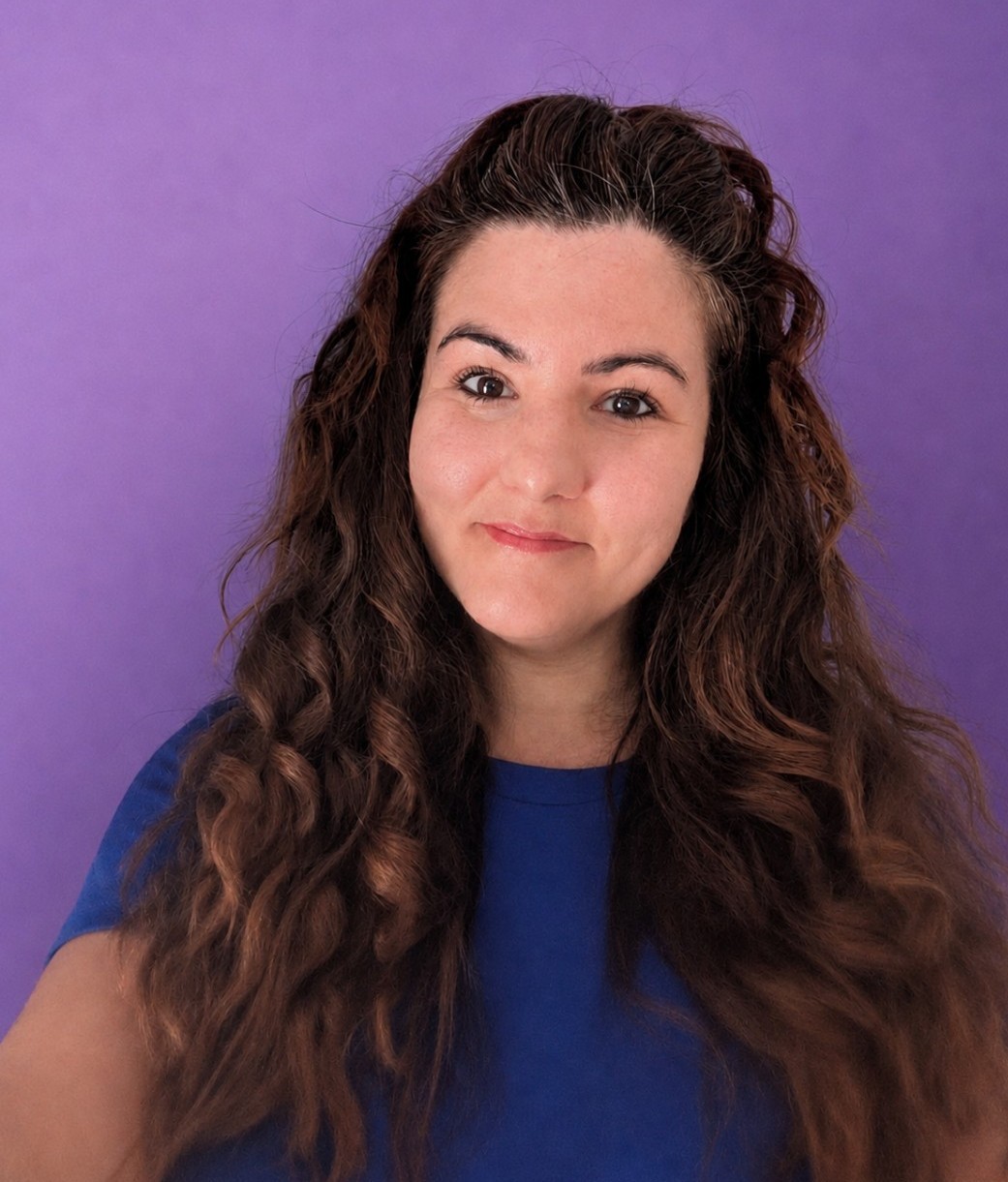
Welcome to ID Inclusion
Samantha Morgan, BSc (Hons), GMBPsS
Inclusion & Impact Consultant | Creator of the ACB Framework | Published Writer | Policy Reformer
Worked Across:
- Higher education
- Social housing committee work
- Rehabilitation: mental health, brain injury and criminal justice.
- Charities
Services:
All work is grounded in lived experience, critical psychology and practitioner practice. I take a collaborative approach.
Lived-experience talks, workshops & discussions on understanding intersecting barriers, reducing barriers and supporting improved outcomes
Consultancy (short-term or retainer-based)
Advisory board & committee roles
Policy and practice reviews (ACB-informed)
Case studies & reflective writing
Accessibility and communication insight
My work supports organisations in understanding complexity, strengthening equity, and building human and inclusive practices.
Samantha Morgan
Lived-Experience Inclusion & Impact Consultant | Creator of the ACB Framework
Samantha Morgan works with universities, housing providers and charities to help them understand and respond to complex, intersecting barriers affecting the people they serve.
She combines lived experience, critical psychology and practitioner insight to translate complexity into clear, practical understanding that informs policy, strategy and service design.
She is the creator of the Against Complex Barriers (ACB) Framework (Morgan, 2025) — a conceptual model that reveals how overlapping factors such as disability, neurodivergence, chronic pain, trauma, poverty, instability and sensory overwhelm interact to shape real-world outcomes.
Her work moves organisations beyond simplified narratives of “inclusion” and toward structurally informed, human-centred practice
Supporting organisations to:
- Recognise and honour complexity
- Understand how to adapt services to improve inclusion, engagement and outcomes
- Strengthen equitable decision-making
- Design and redesign policies and practices that reflects lived reality and reduce exclusion
- Build a deeper understanding and make sustainable, not symbolic, changes.
- Lived experience
- Critical psychology grounding
- Practitioner expertise (adults and children)
- Policy reform
- The ACB Framework (Morgan, 2025)
- Cross-sector practice in education, criminal justice, housing, mental and physical health.
Many consultants offer training focused on neurodivergence or disability in isolation. Samantha’s work goes further. She applies an intersectional, systems-informed approach that examines how overlapping factors such as disability, neurodivergence, trauma, poverty, chronic illness and instability interact with organisational structures to shape experiences of inequity and barriers to access. Rather than focusing on labels or prescriptive strategies, she explores the relationship between individual experience and institutional design. This social–individual interface is often where hidden barriers sit.
⭐ Impact at a Glance:
- Initiated major policy reform at a UK university, affecting thousands
- Work published and featured in Times Higher Education, The Open University, Suffolk News, The Open University Psychological Society, and Social housing resident communications.
- Creator of the ACB Framework, influencing thinking across multiple sectors
- Undergraduate research featured in The Psychic News, published by the very community the research sought to empower.
- Developed lived-experience resources used by Open University tutors
- Delivered talks at national events and conferences
- Lived-experience advisor across sectors; housing, charity and education
- Known for powerful communication that shifts understanding
⭐ The ACB Framework (Morgan, 2025)
The ACB Framework is a lived-experience-driven, practitioner-informed conceptual model that challenges traditional, single-label approaches.
Instead of practitioner-defined categories, ACB centres self-defined, flexible, real-life barriers, enabling more accurate understanding and support.
The framework draws on:
• the Social Model of Disability
• intersectionality
• Samantha’s proposed concept Stimuli Goodness of Fit (Morgan, 2025) – understanding how sensory, cognitive, social and environmental stimuli support or obstruct someone’s ability to thrive.
Read the full ACB conceptual preprint on Figshare (Morgan, 2025)
The ACB Framework, PETALS concept, associated diagrams and Stimuli Goodness of Fit are licensed. Adaptation or training use requires written permission. Academic citation permitted.
⭐ Why This Work Is Needed
Many barriers people face are invisible, but their impact is reflected in national data:
- Disabled people are 30% less likely to be employed (ONS, 2022)
- 77% of autistic adults want work; only 30% are employed
- Nearly half of autistic adults experience harm at work (Nicholls, 2025)
- Disabled adults are three times more likely to hold no qualifications
- Autistic graduates are twice as likely to be unemployed
These outcomes do not reflect individual capability- they reflect systems designed without complexity in mind.
ACB highlights how experiences such as disability, neurodivergence, chronic pain, trauma, poverty, sensory overwhelm and instability overlap – and why standard approaches often fail.
When complexity is ignored, people fall through gaps.
When it is recognised, people thrive.
⭐ Previous Work Includes
- Initiating policy reform at a UK university
- Presentations, training and resource development for The Open University
- Social housing committee role
- National conference presentations
- Development of lived-experience learning materials for tutors and health professionals
- Reflective and insightful case studies for funding bids for charities
Experience


References
Office for National Statistics. (2022). Outcomes for disabled people in the UK: 2021. [Online] Available at: Outcomes for disabled people in the UK – Office for National Statistics (Accessed 19/05/2025).
Nicholls, T. (2025). Shrinking the autism employment gap: Finding out what really works. Autism, 29(3), 551-553. [Online] Available at: https://doi.org/10.1177/13623613241310926 (Accessed 19/05/2025).
⭐ Testimonials
I was fortunate enough to be invited to a presentation that Samantha was presenting at. Her presentation was executed in a professional manner, whilst simultaneously interweaving the presentation of her own lived experience. I found Samantha supportive and greatly admire her drive to improve educational experiences and access for students, particularly for students with neurodivergence. Samantha would be a huge asset to any company who were privileged to have her working with them
Samantha was my mentor. I greatly valued Samantha's honesty and openness in sharing her lived experiences, including the barriers she has faced. Despite these, she has persisted and achieved so much. Samantha is passionate about driving change and making a difference for others. Her sharing of her own experiences, along with her questioning skills and drive to seek out change, has been inspiring and is leaving a lasting impact
Samantha Made Valuable contributions to the tuition-focused blog. Contributing to blogs can be a daunting task, especially when focused towards an academic audience. Samantha was brave, creative and timely with her contributions, always willing to consider how content could be leveraged in the most effective way to portray her ideas.
Sharing their experiences is helpful for me to think about my own experiences and any preconceived thoughts I may have. This in turn, has already led me to reflect on interactions with colleagues and what I could do differently to get the most out of the relationships. It has made me challenge my own views, as I was a little more black and white with my knowledge of different neurodiversity! II had no idea how neurodiversity would interact with each other!
Send an enquiry
Send Samantha a message
Sign up to the newsletter to be updated on blog posts and new events