Today’s newsletter is about returning to the hostel I lived in at 16, over 20 years later, and what all of this has taught me. I hope that by sharing my story, it can spark new ways of thinking, as it typically does, or, at the very least, be of interest to my readers.
Before I start, I just want to say thank you. I was extremely taken aback to see almost 600 people sign up for my newsletter in less than a week. Funny, really, considering I once wondered if I had anything of use to say. This tells me people do want to listen, and I appreciate that. This is daunting to send, but here we are!
This is about what it feels like, as an adult, to go back to the place you moved into on your 16th birthday with nothing more than a few plastic carrier bags and a drug addiction. And also what I wish I knew back then.
When I was 16, I moved into the Cangle after a period of instability, including living in hotels. It was a horrible existence – an old, shabby hotel on the outskirts of a town that had a massive drug problem. At that point, I had undiagnosed ADHD and autism. My behaviour was uncontrolled, I was deep in addiction, and being exploited.
When I arrived at the Cangle, they gave me the headmaster’s room, which was the biggest one, as they were hoping I’d focus on homework. The irony is, I was barely attending school. That room overlooked Haverhill, and I could see so many opportunities around me that I just couldn’t access.
I made the room spotless. Cleaning became my coping mechanism. I made friends, tried to cook, tried to exist in a way that felt manageable. But I had no support, as many young people also do not today. One day, my anger exploded, and I threw chairs. I was kicked out.
I believe the media and services can talk far too lightly about undiagnosed neurodivergence. It isn’t minor as it can be life-threatening. When you don’t understand how your brain works, and neither does anyone around you, you don’t just struggle. You become vulnerable, misunderstood, and often targeted. That’s why narratives around “overdiagnosis” are so harmful. Addiction is more common in neurodivergent people.
We are not superheroes.
Labelling theory is interesting; I was told I’d never succeed by teachers and others who said someone like me wouldn’t amount to anything. Those messages and labels stay with you. Labelling theory, in a very basic description, means that people can become what they are repeatedly labelled as. This is why it’s so important to use words carefully and choose to empower and not label or make assumptions based on stigma.
Imagine telling a young person they will only ever face disadvantage, and they are not capable.
Now, in comparison, imagine telling them they will succeed, that they are worthy, that the socially constructed barriers they face are not their fault and existed, one way or another, before they were around, and that you will help them challenge them.
I’ve seen people I grew up with – some made it, some didn’t, and some are no longer here. I was lucky, and that is why I do the work I do.
In my 30s, things began to change. I completed an internship at the Open University, published my work, and began advocating for neurodivergent learners. I challenged barriers, and people started to listen. I earned my degree, wrote a framework, and was accepted to study at Cambridge University for my postgraduate studies.
But success is not just Cambridge. It can be so many things: living independently, volunteering, rebuilding your life, and stability. Sometimes it is simply being able to walk down the road when you once couldn’t. Achievement is what you define it as, and not just what capitalism or common norms and social representations of success say it should be.
I have sat in rooms full of professionals without quite accepting that I am one of them – even after my work has been recognised. That is the nature of facing so much criticism and disbelief. It doesn’t just disappear. That is what labelling and assumptions cause.
It still surprises me, especially when I hear things like “everyone should have Samantha in their team” or being described as “a top ten voice to look out for in social housing.” I’m told my work has a real impact and that I naturally create spaces where people feel able to open up, where honesty and hope exist at the same time.
That contrast – between self-doubt and being seen that way – is something I am still learning to sit with. I think it’s something anyone who has faced disadvantage may live with.
The imposter feeling, borne of years of judgement and barriers.
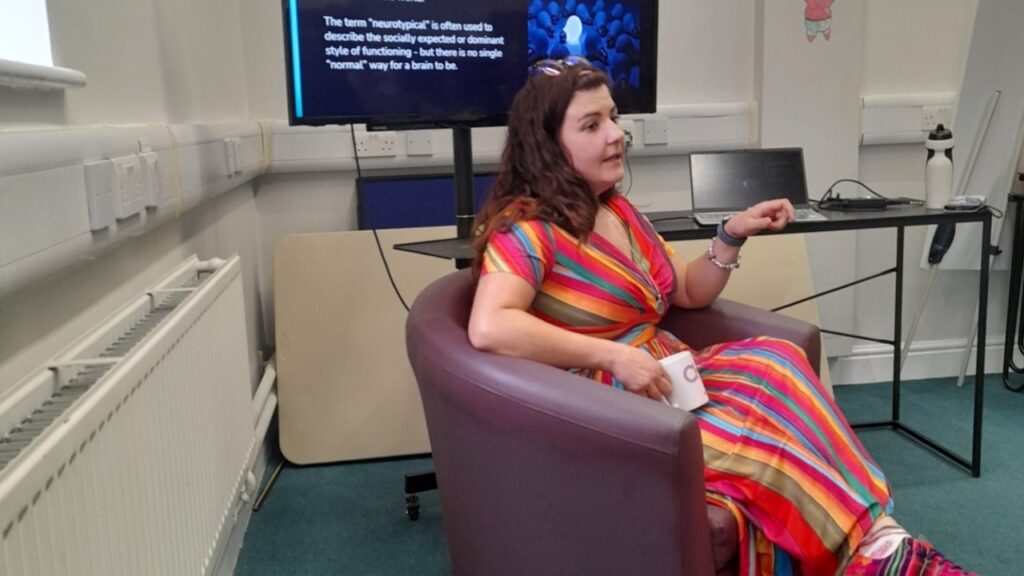
Going back to the Cangle last week was significant. I sat in front of young people in positions very similar to the ones I once held. They looked at me, not quite knowing who I would be. Would I preach? Would I tell them what to do? Or would I actually have something real to say?
I took time to develop what I shared with them. I wanted it to land properly. I mean, I literally thought about it and developed it over months.
I decided to sit and tell them the truth. I told them they will face stigma. That they will be judged, misunderstood, and at times rejected. I am not sorry for saying that because it is the truth. There is little value in glorifying the world they are stepping into.
But I didn’t leave them there.
I gave them some tools: awareness of their rights, the adjustments they are entitled to, how to advocate for themselves, and how to recognise when something is not their fault. I told them that one day, they could be sitting where I am now. I told them their struggles will make them more interesting and grounded, and that they are entirely worthy of good things, and that their current circumstances do not define them.
I told them that when they face stigma and judgement solely based on their circumstances, it will be the other person’s ignorance, and to please remember my words and their tools so they do not think they are defective.
I told them there is so much good out there, too, and they will meet supporters and good people. Sometimes they will need tools, and these may not be people; they can be things like pets, a journal, or a self-care activity.
I told them my biggest supporter was me, as sometimes that’s all we may have – and in that moment, it connected.
We spoke openly, and what followed were conversations I won’t repeat in detail, because they were personal to each individual. But they spoke about mental health, belonging, stigma, and acceptance – openly, in a room full of people, with someone they had only just met.
That doesn’t happen by accident.
I am tired of seeing headlines – particularly in places like the Daily Mail shouting about autism and ADHD being “overdiagnosed”, or suggesting that people like us are getting “too much help”.
Because the reality is very different.
It is a fight to get a diagnosis, and once you get it, you are often left to navigate everything on your own. So the idea that people are being over-supported simply isn’t true. What I don’t understand is why there is so much anger directed towards people who are already navigating so much. We are labelled, misunderstood, and judged when in reality, it is already hard enough.
When I went back, I noticed the flowers growing at the Cangle and a feeling of safety. It sounds small, but it stayed with me. I’ve offered to go back, and they want me to. And I will once I know the time is right.
This work isn’t something you can force or predict. It grows – naturally- through trust, honesty, and lived experience.
And this is where it matters.
If we misunderstand behaviour, miss neurodivergence, or rely on telling people to “try harder” instead of removing barriers, we don’t just fail people – we reinforce the very outcomes we are trying to prevent.
I have said it time and time again, and I repeat it now: telling people to work or try harder to achieve without addressing a lack of inclusion, barriers, or access to tools is harmful.
Plus, how are we defining ‘achieve’? What are we comparing this against- Is achievement being famous, becoming sober, gaining qualifications, learning to cook or paying a bill independently, or is it finally being able to leave the house?
Many systems are, unintentionally, set up in ways that exclude. That is why I created a draft framework to challenge how people are assessed, how behaviour is interpreted, and how decisions are made. Because we cannot rely on systems alone to create opportunity.
We have to question old narratives and make space for new ones, and my work sits in that space.
I don’t just share a story. I open up conversations that may not normally happen the kind that allow people to reflect honestly on how their work is experienced by the people they support. Or for service users to feel seen and heard.
And those conversations change things.
They change how professionals see behaviour. They change how people feel within services. And ultimately, they change outcomes.
I work across housing, education, and social sectors, bringing lived and extensive professional experience into practice, not just awareness, but understanding that translates into change. I never claim to know it all, as nobody does; that is why open conversations matter.
If you work with students, service users, residents or staff and want to better understand barriers, neurodivergence, and inclusion in a way that actually connects and shifts thinking, I would be happy to discuss working with you. You can reach me here or via email. I offer talks, workshops, consultancy and policy reviews.
If you have got this far and it resonated, please leave a little comment, as it helps to open conversations and also, as I cannot believe I am sending this out and would welcome feedback!
Let’s create change, as people are more than labels and circumstances.